01 About
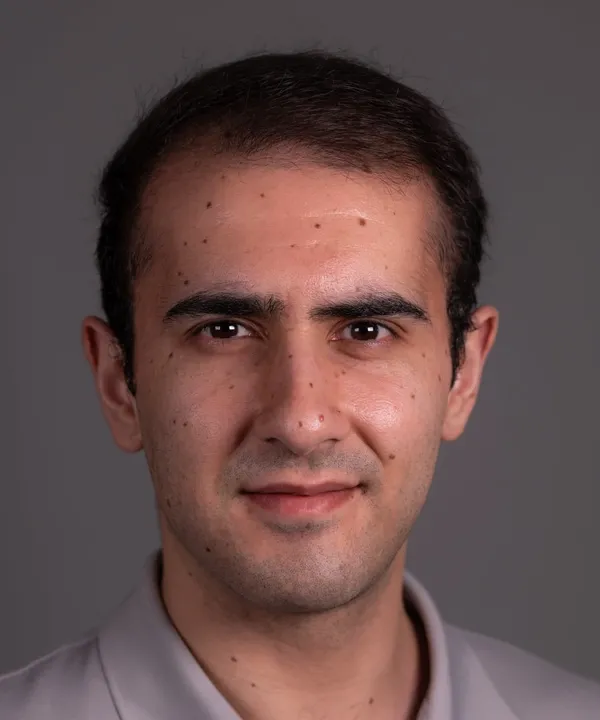
Nick Kashani Motlagh
I’m a machine learning researcher and engineer with a PhD in Computer Science and Engineering from The Ohio State University. I develop machine learning methods for computer vision and natural language processing.
My dissertation, Answering Under Uncertainty: Abstention, Ambiguity, and Recoverability, connects three questions: when a classifier should withhold a prediction, whether a multimodal model uses its evidence, and whether revising an answer helps or hurts. My work includes four first-author peer-reviewed papers and the Springer Best Paper Award at ISVC 2022. My research on retrieval-augmented answer revision is available as Return or Revise?, an arXiv preprint (v1, September 24, 2026) that has not been peer-reviewed.
I work as a Computer Engineer II at DCS Corp, developing synthetic question-answer datasets from domain-specific documents and training QA models. I own the full pipeline from data generation through training and evaluation, using Slurm in high-performance computing environments. Previously, I conducted research in Ohio State’s Computer Vision Lab and completed five summers of AFRL-sponsored research. My hands-on work includes Python and PyTorch, Hugging Face models, LoRA fine-tuning, and experiments on Slurm and Singularity clusters.
I earned my PhD in August 2026, advised by Prof. Jim Davis, with graduate minors in Mathematics and High-Performance Computing. I also hold an M.S. (2025) and a B.S. with Honors (2021) from Ohio State, and have reviewed for CVPR, ICCV, and ECCV.
I’m available now for Research Scientist, Research Engineer, Machine Learning Engineer, Applied Scientist, and Software Engineer (AI) roles. I’m based in Columbus, Ohio, open to relocating, and a U.S. citizen, so no sponsorship is needed. Email me at nmotlagh@gmail.com.